Seven Hair Care Tips You Probably Never Knew
Over the years, I’ve been lucky to learn from one of the best hair experts I’ve ever met — my longtime stylist, Eric. He wasn’t just a hairdresser; he was a walking encyclopedia of scalp health, hair chemistry, and all the tiny things that make a huge difference to the health of your hair.
Eric retired a few years ago, but his advice has stayed with me. Every single tip he gave me — from how I towel-dry my hair to how I handle scalp massage — has genuinely transformed the way my hair feels and looks.
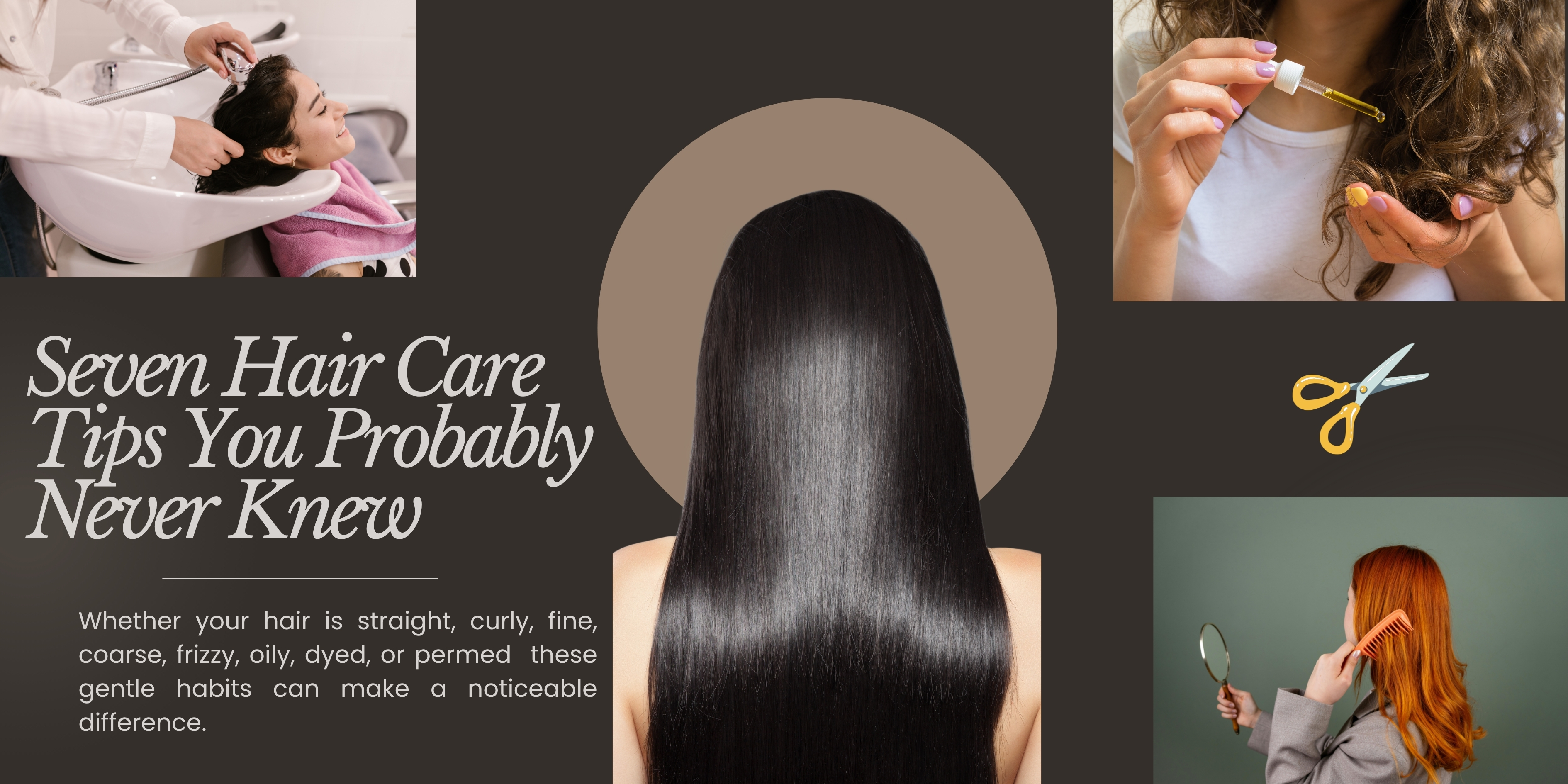
So today, I’m sharing some of his timeless wisdom — tips that work for every hair type. Whether your hair is straight, curly, fine, coarse, frizzy, oily, dyed, or permed — these gentle habits can make a noticeable difference.
Maybe you’ve heard a few of them before… but I promise, a few will surprise you.
Ready? Hair we go (yes, I said it 😄).
-
Tip 1 – It’s Hot to Blot, Not Rub
After washing your hair, most people instinctively grab a towel and start rubbing like they’re polishing silver. Stop right there. Eric always said this is one of the fastest ways to damage hair.
Instead of rubbing, gently blot your hair with a towel or even better, wrap it up like a soft turban and let the towel absorb moisture on its own. You can use this time to apply skincare, tidy your space, or just relax for a few minutes.
Why It Matters: Rubbing wet hair creates friction — and friction weakens the hair cuticle, causing frizz, breakage, and split ends. Under a microscope, rubbed hair looks frayed and rough, while blotted hair remains smooth and healthy. Once Eric showed me that difference, I never rubbed again.
Now, my post-shower towel wrap is part of my beauty ritual — elegant, effortless, and kind to my strands.
-
Tip 2 – Wide-Tooth Combs Are Non-Negotiable
No matter your hair type — thick, thin, curly, or straight — the moment your hair is wet, it’s at its weakest. That’s why Eric always emphasized using a wide-tooth comb when detangling.
Start from the ends and gently work your way up, supporting your strands with your other hand to avoid tugging at the roots. If your hair is prone to knots, use a bit of leave-in conditioner or detangling spray before combing.
Why It Matters: Wet hair stretches easily — and overstretching leads to breakage. Using a wide-tooth comb reduces pulling and helps distribute natural oils evenly from root to tip. I even use a wide-tooth comb on dry hair now. It helps maintain volume and minimizes stress on my fine strands.
-
Tip 3 – When Hair’s Dry, Air Dry
Before blow dryers became household staples, everyone air-dried their hair. And guess what? People’s hair looked softer, healthier, and less like a haystack.
Eric used to say: “If you want your hair to stop acting like straw, stop roasting it like one.”
Letting your hair dry naturally is the healthiest option. But if you absolutely love your blow dryer, try this instead:
- Wait until your hair is about 70–80% air-dried before you pick up the dryer.
- Always use the cool setting or at least keep the heat low.
- Keep the dryer moving and avoid holding it too close to your scalp.
Why It Matters: Heat styling removes moisture from the hair shaft, making it brittle over time. Even one or two air-dry days a week can make your hair noticeably shinier and stronger.
Try it once — you might be surprised how soft and manageable your hair feels.
-
Tip 4 – A Quick Oil Treatment Before Showering
You’ve probably heard of oiling your hair, but Eric’s version was simple, quick, and surprisingly effective. He recommended applying a small amount of olive, coconut, or sweet almond oil to your dry hair before showering — not after.
Warm a little oil between your palms, massage it gently into your scalp, and run your fingers through your strands. Leave it for just 2–3 minutes before washing your hair as usual.
How Much to Use:
- Short to medium hair: about ½ teaspoon
- Long or thick hair: 1–2 tablespoons
You’ll know you’ve used the right amount if your hair looks healthy, not greasy.
Why It Works: This pre-shampoo treatment helps protect your strands from harsh shampoos and restores natural oils stripped during washing. It nourishes your scalp, boosts shine, and makes detangling easier afterward. Bonus tip: If you make your own infused oils, try nettle or rosemary oil — both are amazing for scalp health and hair growth.
-
Tip 5 – Light Oils Make Great Natural Conditioners
Who needs expensive serums when nature provides better options? Eric always said that a few drops of natural oil can work wonders as a lightweight conditioner.
Oils like jojoba, coconut, argan, or hempseed mimic your scalp’s natural sebum and add softness without buildup.
How to Apply: Rub 2–3 drops between your palms and run your hands through your hair, focusing on the ends first. Remember — less is more. You can always add a little more if needed, but too much can make your hair look oily.
Why It Works: These natural oils seal in moisture, smooth frizz, and add healthy shine — all without silicone or synthetic residue. You can use them on wet hair for light conditioning or on dry hair to tame flyaways and dry ends.
If you already have an herb-infused oil from your pre-shampoo treatment, double up and use that. Your hair will thank you.
-
Tip 6 – Massage Away Thinning and Baldness
This was Eric’s favorite topic — and his most passionate one. He used to say that the secret to a full head of hair isn’t in fancy products, but in stimulation.
Have you ever noticed that hair rarely thins at the nape of your neck? That’s because that area naturally gets more movement and circulation from daily activities — turning your head, sleeping, or even laughing.
But the top of the scalp? It doesn’t move or flex much at all. That’s why stimulating it manually is so important.
How to Do the 1-Minute Scalp Massage:
- Place your fingertips (not nails) on your scalp.
- Gently move the scalp in small circular motions — think of shifting the skin, not sliding your fingers.
- Cover the entire scalp, especially the crown.
- Continue for 60 seconds.
Why It Works: This massage improves blood flow to the hair follicles, delivering nutrients and oxygen that promote growth and prevent thinning. Over time, regular scalp massage can help strengthen the roots and make your hair feel thicker. You don’t need strength — just consistency. Within two months, you’ll likely notice a difference in how your scalp feels and how your hair behaves.
-
Tip 7 – Skip the Salt Spray
If there was one topic that made Eric’s blood pressure rise, it was salt spray. He always said, “Salt belongs on fries, not your hair.”
Salt spray may give your hair that “beachy” texture temporarily, but it comes at a high cost. Salt is extremely drying, pulling moisture from both your strands and scalp.
Why It’s Harmful: Even the priciest salt sprays with “hydrating ingredients” can’t offset the damage salt causes over time. It leaves your hair brittle, dull, and prone to breakage — especially if used regularly.
So, if you love that tousled, textured look, use a seaweed-based or sugar-based styling spray instead. They’re much kinder to your hair and still give that effortless, beachy volume. Your scalp will be happier — and your hair will thank you with extra bounce and shine.
Final Thoughts
The truth is, healthy hair isn’t about complicated routines or expensive products. It’s about small, consistent habits — the kind that respect your hair’s natural balance.
- Towel gently.
- Comb softly.
- Air dry when you can.
- Nourish your scalp with oils.
- Massage daily.
- And never forget: your hair deserves kindness, not harsh treatment.
The more gentle and intentional you are, the more your hair will reflect that care — glowing, strong, and full of life.
So next time you step out of the shower, skip the rush, skip the heat, and take a minute to treat your hair the way it deserves. Because great hair doesn’t come from a salon visit — it comes from how you care for it every single day. 💛