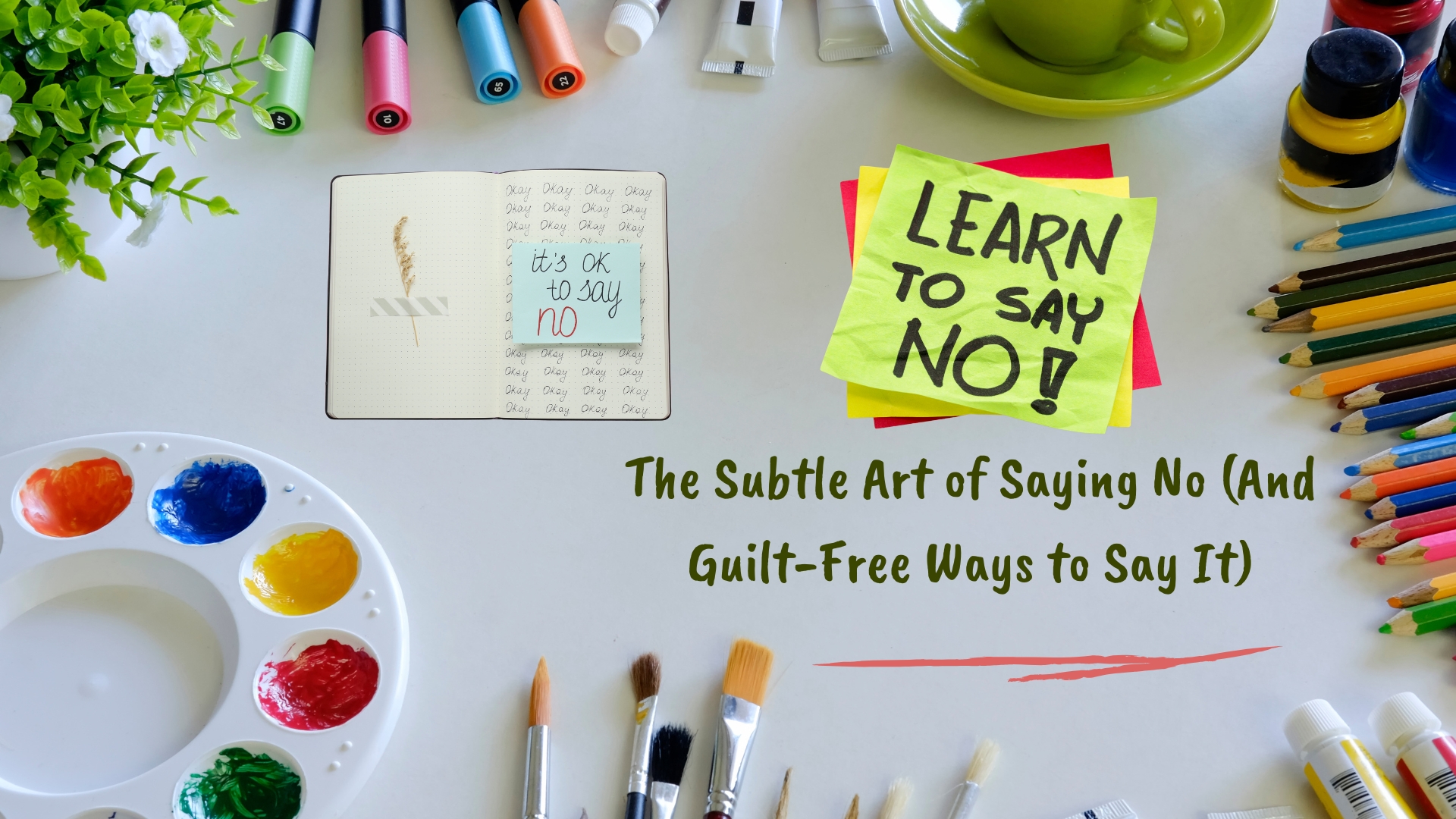
The Subtle Art of Saying No (And Guilt-Free Ways to Say It)
I was chatting with my mum last weekend. Our conversation followed the usual rhythm — kid updates from my end, gardening updates from hers, and the inevitable weather comparisons that always sneak in.
She mentioned she’d been resting more lately because she hurt her back. Apparently, she had been moving bloody big boulders in the garden — all by herself.
You see, my dad passed away last year, and that moment reset so many parts of Mum’s life. It was like someone hit the factory reset button. Suddenly, she was learning things she’d never needed to before — paying bills online, handling credit card statements, booking holidays, fixing irrigation systems, and doing literal heavy lifting.
So when she told me she was now dealing with back pain, we started discussing rest, heat packs, and the free physiotherapy sessions she could get. Everything made perfect sense — until she casually mentioned she was about to play 27 holes of golf in an upcoming tournament.
“WTAF, Mum?!” I nearly shouted. “Twenty-seven holes of golf?! How is that possibly good for your back?”
Apparently, a new member had joined her golf club and didn’t have a partner. “So she needed a partner,” Mum replied — as if that explained everything. “And it had to be you — with your bad back and no golf buggy?” “Well,” she said matter-of-factly, “because there was no one else.”
I bet there was, I muttered. But that’s Mum — someone needed help, and she felt she had to offer it. She just couldn’t let anyone down. Even if it meant hurting herself in the process. That, right there, is a lifetime of people-pleasing playing out in one moment.
The Hidden Cost of Saying “Yes”
Here’s the truth: Every time you say yes to one thing, you’re automatically saying no to something else.
- Saying yes to that golf tournament = saying no to the rest her back desperately needed.
- Saying yes to a client who gives you bad vibes = saying no to the right-fit client you’ll no longer have time for.
- Saying yes to every urgent work request = saying no to personal time, hobbies, or simple rest.
I’m not suggesting that “no” should be your default answer to life. Sometimes, a yes opens doors — new opportunities, new friendships, and unexpected growth. But every yes still has a price tag. That’s why it’s powerful to pause before committing and ask yourself: “If I say yes to this, what am I saying no to?”
Why Saying “No” Is So Hard
For many of us — especially women — saying “no” feels wrong. We’ve been raised to be helpful, polite, and accommodating. We’re taught that a “good” person doesn’t disappoint others. So when we turn someone down, we instantly feel guilty.
But here’s the paradox: Every time you say yes to others at the expense of yourself, you’re letting yourself down. You can’t pour from an empty cup. Saying no is not selfish. It’s self-respect.
When You Should Absolutely Say No
Saying no isn’t about being difficult — it’s about setting boundaries that protect your mental, emotional, and physical energy. You should say no when:
- The request makes you uncomfortable or uneasy.
- It crosses your personal or moral boundaries.
- You’re saying yes out of guilt or obligation.
- You’re overloaded and simply need rest.
The Power of a Pause
Here’s a simple yet game-changing trick: Don’t respond immediately. When someone asks for a favor, a meeting, or a commitment, resist the urge to answer on the spot. Take a breath. Pause. Reflect.
You can always say: “Let me check my schedule and get back to you.” That pause gives you space to consider your priorities — and it stops you from reflexively saying yes out of habit or guilt.
Guilt-Free Ways to Say No
If the word “no” feels too harsh, here are gentle but firm phrases you can use:
- “Sadly, I have something else going on.”
- “I have another commitment.”
- “I wish I were able to.”
- “I’m afraid I can’t.”
- “I just don’t have the bandwidth/time/availability for that right now.”
- “I’m honoured you asked me, but I simply can’t.”
- “Thanks for thinking of me. However, I’m not able to.”
- “I’m sorry, I can’t fit this in right now.”
- “Unfortunately, I already have plans. Maybe next time!”
- “Thanks, but that’s not going to work for me.”
My Secret Weapon: Silence
After you say “no,” stop talking. Don’t justify. Don’t apologize. Don’t fill the silence. Just say your “no,” and let it stand. The more you practice this, the easier it becomes — and the more space you create for what truly matters.
Saying No = Self-Care
When you start saying no more often, you begin to feel lighter, calmer, and more in control. You have time for the things that fill you up — rest, hobbies, meaningful relationships, and personal growth. No isn’t rejection. It’s redirection toward the life you actually want to live.
A Quick Reflection Exercise
Grab a pen and paper. Think back to the last time you said yes when you really wanted to say no. Now write for five minutes about what would have been possible if you’d said no.
- Would you have felt calmer?
- Would you have had more rest?
- Would you have protected your boundaries better?
Reflect on that moment — not to feel regret, but to learn from it. Every “no” is practice for a more aligned, peaceful life.
Final Thoughts
The art of saying no is subtle but powerful. It’s not about being unkind — it’s about being honest with yourself and protecting your time, energy, and emotional health so you can show up fully for the things that truly matter.
Next time you feel the pressure to say yes, pause and ask: “Is this yes moving me toward the life I want — or pulling me away from it?” A well-placed no today can make space for a much more meaningful yes tomorrow.